
Written by Michelle Sofia Michelle Sofia
Market Analyst
As a financial journalist and a SEO specialist my passion for making education in finance accessible runs deep. My work combines hands-on market trend analysis with straightforward writing to create content that’s both informative and easy to understand for the average reader. At CleaRank, we’ve built our reputation on a simple idea: transparent broker comparisons shouldn’t be reserved for experts because everyone deserves clear and transparent information, especially when it comes to choosing a broker. Day to day, I focus on refining our educational materials to maximize their visibility and usefulness across trading communities. using our CLEAR™ Methodology The CLEAR™ Score (Credibility, Leverage, Execution, Accessibility, Regulation) is our proprietary ranking system. The CLEAR™ Score provides you with the most accurate and transparent broker ranking after evaluating all the key factors that are crucial for trading success. .
Last fact checked on July 1, 2025
Introduction to Stock Trading
What exactly is stock trading? How does it work and do I have any chance of making a living off of it? Many wonder this but few seek the answers. To keep it simple, stock trading isn’t just about a bunch of numbers on a screen—it’s about buying shares of different companies you believe will continue to grow bigger and making a profit from their success.
When someone buys shares of a company they become a “fractional owner”, meaning they are now eligible for its earnings and assets. There are two ways of making money from buying these shares, from the dividends you receive or from capital growth.
The Financial Markets in a Nutshell
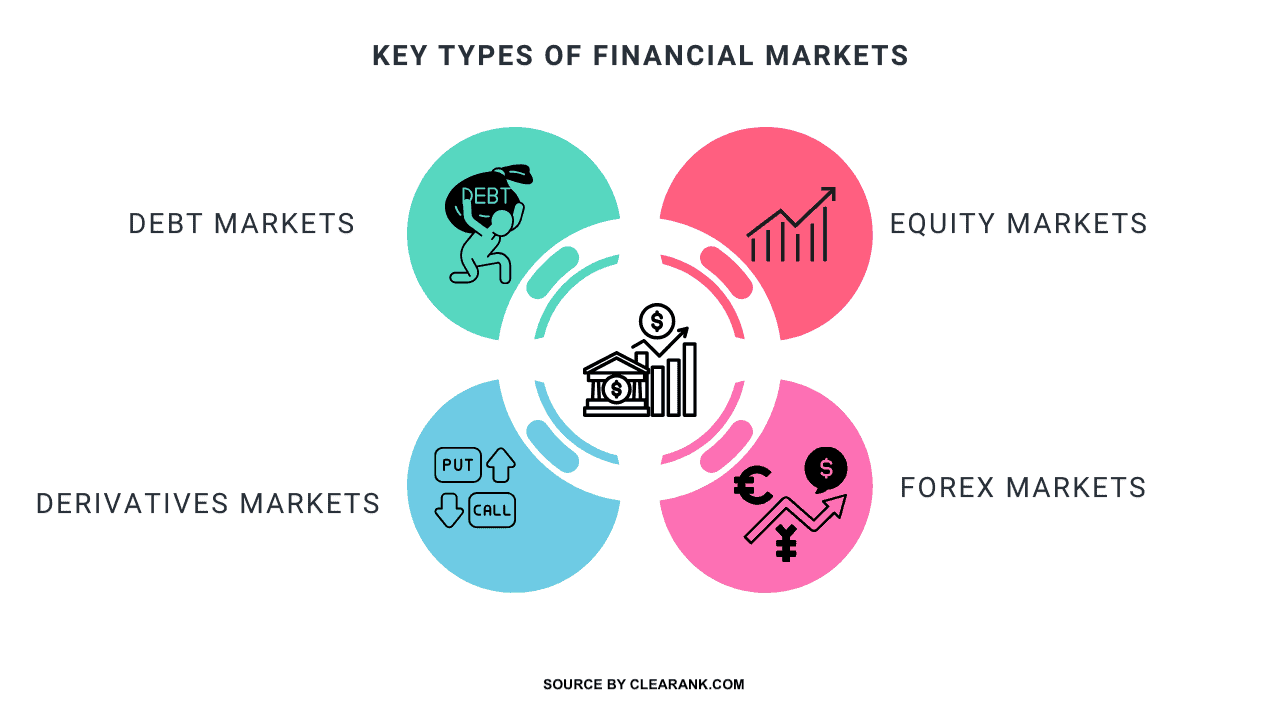
The financial markets are simpler than most people think, but obviously require a deeper understanding if you want to profit from them. There are different types of financial markets that form our economic systems, take the time to understand each of them before even thinking of investing.
Warning: Do not invest your hard earned money just because your friend Mike told you to do it. Investing without the proper skills or knowledge is the best way to effectively lose all your capital. Remember, the people who don’t believe in the stock market are those that have lost money.
Types of Financial Markets:
Market Type | Description | Examples |
|---|---|---|
Equity Markets | Where shares of publicly listed companies are traded. | Stock exchanges like NYSE, Nasdaq |
Debt Markets | Focused on the issuance and trading of bonds and other debt instruments. | U.S. Treasury Bonds |
Derivatives Markets | Involves instruments like futures and options that derive value from an underlying asset. | Options contracts, Futures |
Forex Markets | Dedicated to trading national currencies on a global scale. | EUR/USD, GBP/USD pairs |
Individually, these markets serve a unique purpose but together they form a cohesive system that fuels our global economic activity. For example, equity markets give companies the opportunity to raise capital by selling a part of their ownership, while forex markets make international trades smoother by allowing currency conversions.
Role and Function of Stock Exchanges
Stock exchanges are where all the magic happens, they are the centralized platforms people buy and sell securities from. Their existence allows companies like Apple to raise funds for expansion while giving investors the opportunity to earn returns.
Main Functions of Stock Exchanges:
Function | Description |
|---|---|
Facilitating Capital Raising | Gives companies the option to raise funds through Initial Public Offerings (IPOs). |
Ensuring Liquidity | Allows participants to buy or sell shares quickly and efficiently. |
Price Discovery | Determines the fair value of securities through supply and demand. |
Investor Protection | Enforces regulations to ensure transparency and safeguard against fraud. |
The world’s major stock exchanges, such as the New York Stock Exchange (NYSE), Nasdaq, London Stock Exchange (LSE), and Tokyo Stock Exchange (TSE), provide the infrastructure for financial markets globally.
Why Stock Exchanges Matter:
To be blunt, without stock exchanges we would lack all trust in the financial system. Companies and investors must have confidence in the fairness and transparency of the regulatory frameworks. They need to know someone is ensuring that their transactions are executed efficiently. The game needs to be fair, just like in sports that require professional referring and oversight, so do the financial markets.
Participants in the Stock Market
Now that we understand the basics of the stock market, it’s time to break down the participants composing it:
Participant | Role |
|---|---|
Retail Investors | Individuals who trade stocks for personal investment purposes. |
Institutional Investors | Entities like mutual funds and hedge funds that trade in large volumes. |
Market Makers | Ensure liquidity by consistently buying and selling securities at quoted prices. |
Regulators | Organizations like the SEC (U.S.) that oversee trading activities to maintain fairness. |
Each participant contributes to the smooth operation of the stock market. For example, retail investors bring liquidity, while institutional investors provide stability. Market makers reduce transaction delays, and regulators maintain the fairness and transparency we spoke about earlier.
Understanding Stocks and Shares
In simple terms, buying a stock means owning a tiny piece of a company which you can benefit from if the company profits and grows.
Note: Stocks are also known as shares and equities.
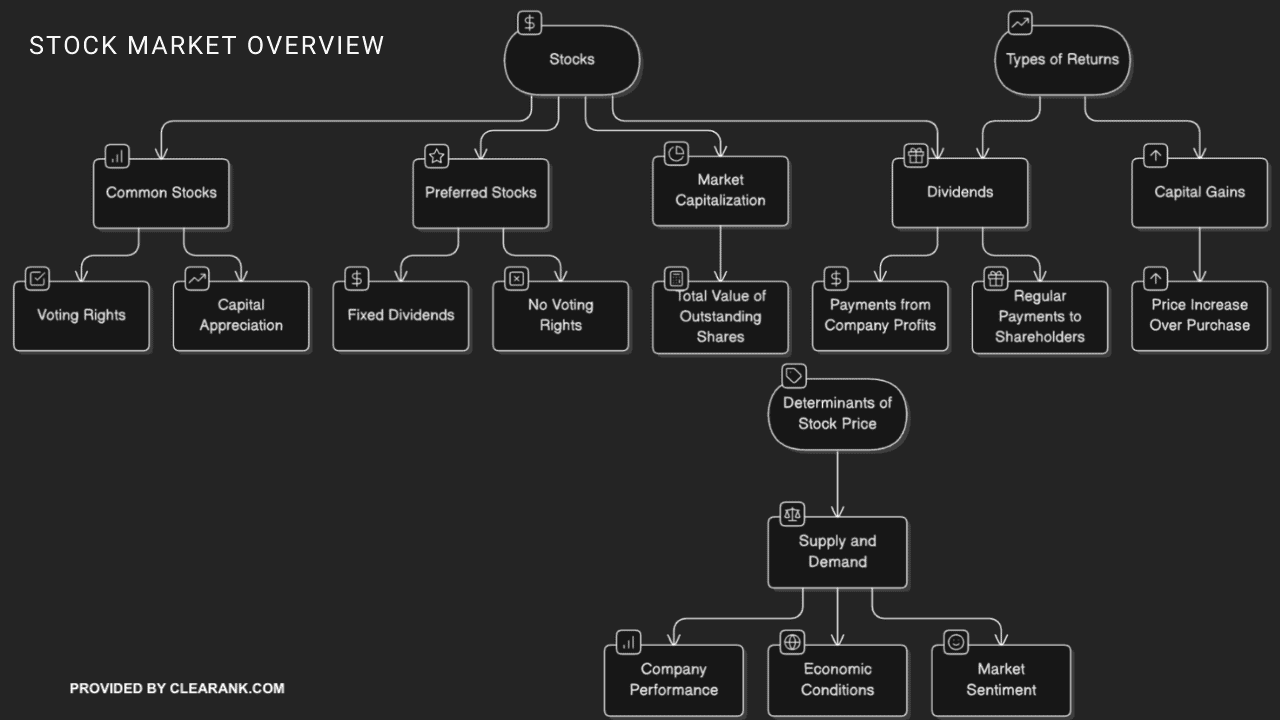
Key Features of Stocks:
Feature | Description |
|---|---|
Common Stocks | Provide voting rights and potential for capital appreciation. |
Preferred Stocks | Offer fixed dividends but typically lack voting rights. |
Dividends | Payments made to shareholders, usually derived from company profits. |
Market Capitalization | Total value of a company’s outstanding shares, reflecting its size and market importance. |
Owning stocks can yield two main types of returns:
- Capital Gains: Earned when the stock’s price increases above the purchase price. The logic is very simple, you buy a stock at 10$ and sell it at 15$.
- Dividends: By owning a share of a company, you have a claim to its profits. In other words, you will receive regular payments made by the company to its shareholders.
How Stock Prices are Determined:
Stock prices work like how most people assume they do, with fluctuations based on supply and demand dynamics. Factors such as company performance, economic conditions, and market sentiment change the stock price. For example, positive earnings reports will raise the stock prices because the demand for it will go up due to higher dividends and capital growth, while negative news can cause them to decline.
Why Invest in Stocks?
Because making money from other companies’ success is an amazing feeling, and it’s a powerful way for you to grow your wealth over time without quitting your current job. Historically speaking, the stock market has provided higher returns compared to other asset classes, However, stocks also come with a lot of risks, making it crucial for investors to conduct thorough research and understand market trends.
What’s Next: Types of Markets and Instruments
Now that we have established for you a solid foundation in the basics of stock trading, our next step is to understand the various Types of Markets and Instruments available for trading. We’ll learn the characteristics of primary and secondary markets, as well as the wide range of financial instruments.
FAQ
What are the main types of financial markets?
Financial markets consist of Equity Markets, Debt Markets, Derivatives Markets, and Forex Markets. Learn more about these markets and their unique roles.
Why are stock exchanges important?
Stock exchanges are critical for upholding trust in the financial system and providing a safe haven for all investors and traders.
Who engages in the stock market?
The majority of the participants in the stock market are composed of retail investors, institutional investors, market makers, and regulators. Together, they ensure smooth market operations.
What’s the difference between common and preferred stocks?
Common stocks offer voting rights and potential capital gains, while preferred stocks provide fixed dividends but usually no voting rights.
How are stock prices determined?
Prices fluctuate based on supply and demand, influenced by company performance, economic conditions, and investor sentiment. Positive news boosts demand, while negative news can lower prices.
What are the risks of investing in stocks?
Stocks carry volatility and potential losses, especially if you invest without knowledge. We warn against following tips blindly. To be clear, you risk losing all your money, so invest your time in learning before you invest any capital.
What are dividends and capital gains?
Dividends are profit shares paid to stockholders, while capital gains are profits from selling a stock at a higher price than purchased.
Why invest in stocks?
If we look historically, stocks have offered higher returns than other assets which enabled wealth growth over time. However, if you hope to make a profit then you will need to do a lot of research and have the proper risk tolerance.
What role do regulators play?
Regulators enforce transparency and fairness. In other words, they safeguard investors from fraud and apply market integrity.
Michelle Sofia
CleaRank started with the simple yet powerful vision that transparent and unbiased broker information should be available to everyone, not just those within the industry. This is where I come in with my many years of experience in financial journalism and SEO. Every day, I focus on creating and refining educational content that truly speaks to trading communities and making it both easy to find and genuinely helpful. It’s all about giving people the knowledge they desperately need in order to make informed decisions—step by step, one article at time.