
Written by Jacob Bakshi Jacob Bakshi
Senior Market Strategist
Trading CFDs and options has been my playground for years, and I love helping others understand these powerful tools and what makes the financial world tick. My work mostly focuses on giving traders the confidence to make informed decisions with unbiased reviews into platforms that prioritize fair pricing, advanced tools, and reliable execution because In fast-moving markets, every detail matters. I have a background in market analysis and risk management, and I’m always on the lookout for brokers that offer the right tools for serious traders. using our CLEAR™ Methodology The CLEAR™ Score (Credibility, Leverage, Execution, Accessibility, Regulation) is our proprietary ranking system. The CLEAR™ Score provides you with the most accurate and transparent broker ranking after evaluating all the key factors that are crucial for trading success. .
Last fact check on July 1, 2025 by
Shaun David Shaun David
Regulation • Trading Algorithms • Market Analysis
I’m extremely passionate about the financial markets and working with innovative technology that makes trading better and safer. Since joining the CleaRank team, my primary role is working with real-time broker performance data using the CLEAR™ technology and broker evaluation methodology. I investigate brokers by testing their platforms and uncovering hidden risks and costs. My end goal is to level the playing field for traders and With an extensive background in market analysis and algorithmic trading, I’m qualified to find what matters most to traders.
How to Hedge Your Portfolio as the Great Trade War Begins
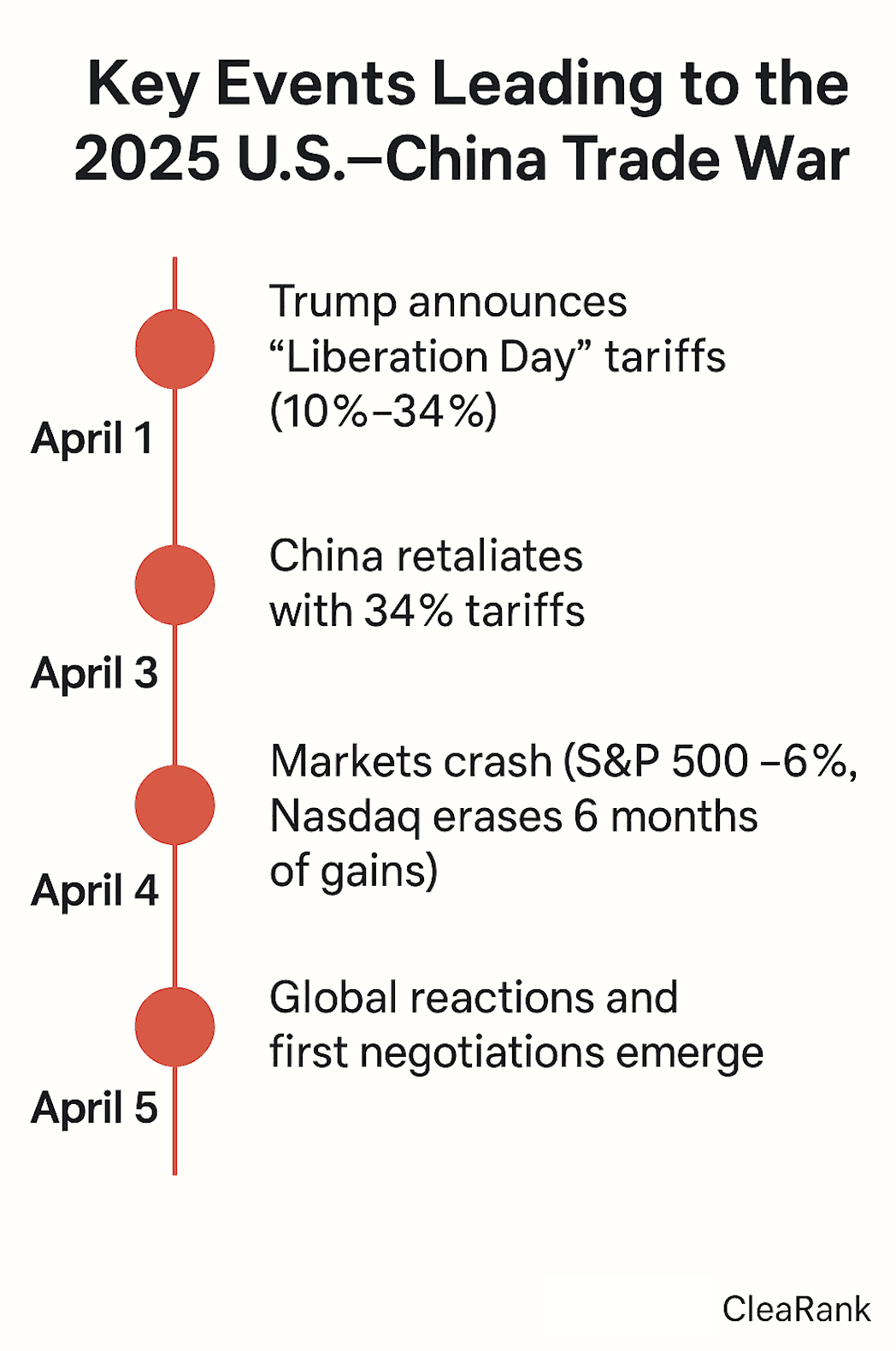
President Trump’s “Liberation Day” tariffs combined with China’s closely followed retaliation sparked the worst two-day selloff in five years. The S&P 500 plunged 6%, tech stocks cratered, and the Nasdaq erased six months of gains. With inflation surging and supply chains crumbling, investors are scrambling to adapt. We are dangerously poised for the greatest trade war in modern history and the stakes are way higher than in 2018. Inflation is already at 2.8%, interest rates remain elevated, and geopolitical alliances are fraying. For U.S. markets it’s starting to shape up like a financial armageddon, so what can you do to hedge your portfolio and protect your wealth.
The $2 Trillion Wipeout: What’s Next?
It didn’t take long for the Chinese retaliation as they matched Trump’s 34% tariffs on Friday, igniting arguably the greatest trade war in modern history and sparking widespread panic. The Dow dropped 1,200 points by Friday’s close, while Apple and Tesla lost a combined $300 billion in market value. “This isn’t a big market correction, it’s a repricing of globalization,” says Michelle Sofia, CleaRank’s Market Analyst. “Investors are realizing that trade wars aren’t temporary and the big question now is who will blink first.”
The U.S. administration and global markets were hoping to see a Chinese regime that is less hot on the trigger and willing to negotiate. But due to the delicate nature of relations right now that seems unlikely until at least July where a potential U.S. meeting between Trump and Chinese President Xi Jinping is already being touted. More than 10 countries have already committed to non-retaliation and are rushing to the negotiating table. The Chinese, on the other hand, are acting from a more powerful position and prefer to keep the heat on the U.S. government. “To respond effectively, we must deepen our coordination with ASEAN, Japan, South Korea, as well as the EU and UK,” a Chinese adviser said, requesting anonymity due to the issue’s complexity.
Key risks now:
- Inflation spiral: Consumer prices could jump 1.2% by 2026.
- Profit collapses: Companies reliant on Chinese imports face margin squeezes.
- Recession dominoes: The IMF warns global GDP growth could halve to 1.6% in 2025.
Immediate Moves to Hegde Your Portfolio
One thing we can say for certain, this is not the time to sit back and watch how things roll out. Yes, we’ve seen it all between the 2008 crash and Covid-19 pandemic, but this time there are too many longer term market shifting factors. Add to that unresolved wars and escalating political tensions such as China/Taiwan, Russia/Ukraine. Israel/Iran, and Syria just to name a few, which could all spark a slippery slope to World War 3. Trade war to hot war is not unthinkable, the probability exists and it cannot be ignored. Here are immediate steps to mitigate risks and prepare your portfolio for the bullish super cycle that will surely follow:
1. Safe Havens: Gold Leads the Way
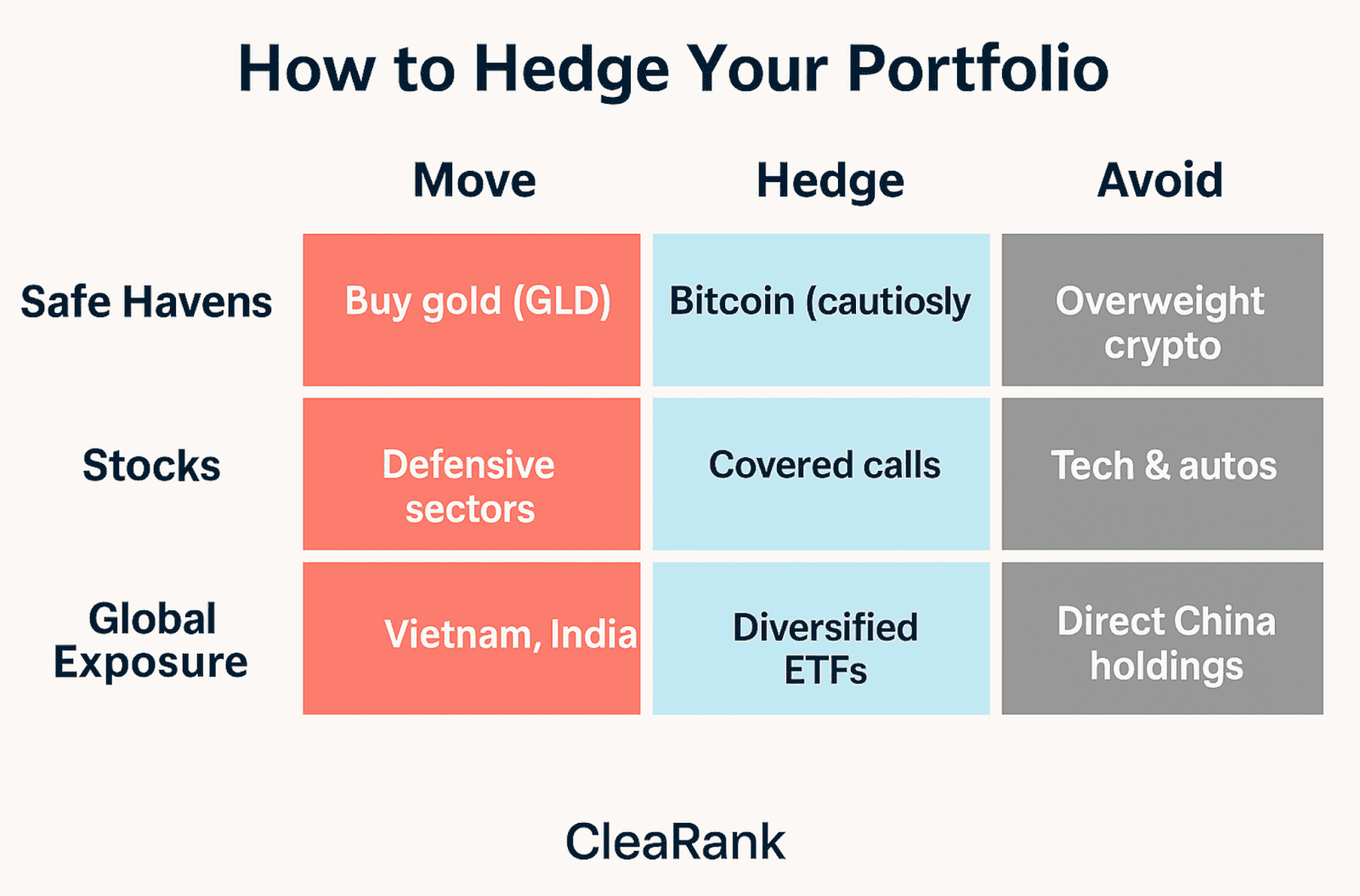
Gold surged to a record to highs last week and is now targeting the key resistance of $3,200 per ounce. Gold’s bullish run further cements its status as the perfect hedge against inflation, policy missteps, and geopolitical chaos. “Gold isn’t just a safety trade, it’s a bet against systemic failure,” says CleaRank’s Michelle Sofia. “Unlike speculative assets, we’re historically banking on more than 5,000 years of trust.”
Bitcoin, on the other hand, still remains a debatable hedge. While it has quickly acquired the moniker of “digital gold,” its volatility and regulatory uncertainty significantly undermine its safe-haven status. The cryptocurrency is well off its 2023 peak, and its strong correlation to tech stocks weakens its appeal during market meltdowns.
Silver is another viable secondary option, having shown consistent growth over the last few years. Its industrial demand in solar panels and EVs provides a floor, but it lacks gold’s historical pedigree as a crisis buffer.
Which hedge to choose:
- SPDR Gold Shares (GLD): Direct exposure to physical gold. Historically the safest and most viable choice, considering current turmoil.
- iShares Silver Trust (SLV): For investors considering industrial upside with modest inflation protection.
- Bitcoin (BTC-USD): It’s a high-risk, speculative hedge at this stage and therefore allocate funds sparingly.
Gold’s track record in past trade wars (up 22% in 2018) cements its status as the ultimate safe haven. Bitcoin, while gaining incredible momentum over the last few years, remains a gamble rather than a refuge during a global crisis.
2. Defensive Stocks: Staples, Utilities, Healthcare
Companies selling essentials thrive in chaos, we saw that during the COVID-19 pandemic and it’s unlikely to change. We witnessed more of the same during the 2018 trade war with Procter & Gamble (PG) and Johnson & Johnson (JNJ) outperforming the S&P 500 by 8%. Utilities like Duke Energy (DUK) also provide stability. “Defensive sectors won’t make you rich, but they’ll keep you solvent,” says Sofia.
3. Slash Tech and Auto Exposure
Tariffs on Chinese chips and batteries are an existential threat for companies like Apple, Tesla, and GM. “Tech supply chains are incredibly fragile-like a house of cards,” warns Shaun David, CleaRank Co-Founder, “Even a 25% tariff on critical components could meaningfully compress margins for Apple and other U.S. tech giants.”
Possible Action:
- Sell covered calls on tech holdings.
- Buy put options on the Invesco QQQ ETF (QQQ).
4. Back Domestic Supply Chain Winners
U.S. Steel (X) rallied 18% last week as steel tariffs took effect. First Solar (FSLR) and Deere & Company (DE) also stand to gain from reshoring. “The winners here are firms with localized production and pricing power,” says David.
5. Diversify Globally But Skip China
As the tit-for-tat trade war escalates, it would be a smart strategy to diversify U.S. exposure and skip Chinese investment altogether. Vietnam (VNM ETF) and India (INDA ETF) are emerging as manufacturing alternatives. A deeper look indicates that Brazil (EWZ ETF) could profit from replacing U.S. farm exports in China.
The Hidden Risk: A Regressive Tax on Consumers
Tariffs could shovel more than $1,000 to annual household costs by 2026. “This isn’t just a corporate problem, it’s a regressive tax on working-class families,” says David. “Retailers like Walmart will struggle to absorb costs without passing them on.
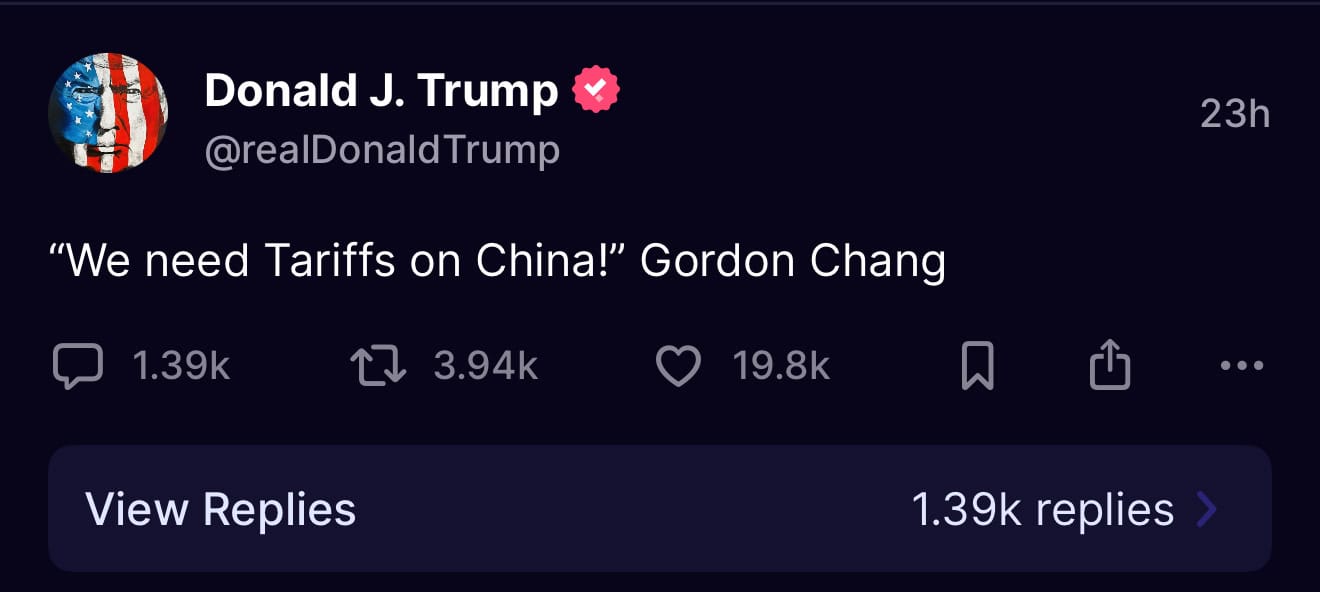
Last week, President Trump amplified his hardline trade stance by quoting China expert Gordon Chang on Truth Social: “We need Tariffs on China!”
The post underscores the U.S. administration’s resolve to go the distance in this epic trade war despite Chinese flexing that erased trillions in global market value and future implications for consumers.
Adapt or Lose: There’s No Middle Ground
“Trade wars reward the prepared and punish the passive,” says Sofia. Rebalance into defensive stocks and commodities, hedge tech exposure, and stay liquid. The Great Trade War is here and the survival of any investment portfolio depends on agility. Act fast and rotate out of vulnerable sectors, lock in inflation hedges, and brace for more volatility. The rules of investing have changed overnight and could linger for the foreseeable future.
Disclosure:
This analysis is provided for informational purposes only. All prices, data, and forecasts reflect market conditions at the time of writing and the latest fact-check (as of the date specified above). Investors should consult with a qualified financial advisor before making investment decisions.
Jacob Bakshi
I’m Jacob and I specialize in CFDs, options trading, and market analysis. Over the years, I’ve developed a deep understanding of the risks and rewards that come with trading derivatives and survived enough volatility to know that trading is like skydiving: thrilling, but you’d better trust your parachute (or broker). I use CleaRank’s Methodology to test brokers based on their offerings and ensure traders that visit our site have access to brokers that align perfectly with their trading strategies.